-> In the beginning there was underground Acid and become underground Techno. In the old days,
the line between Acid and Techno was not as sharp as it is today, There was Techno with 303 filters and Acid without.
But now we have Acid Techno, the best of the two in one style. I love the pumping Techno beat and the screaming of the 303 together.
In Acid Techno there are also different styles, the more Funky & Groovy and more Experimental & Acid-Core style. Within the limits of the extreme,
we simply want danceable music, and go for the experience of the human mystique of our dancing ancestors.
03-03-21 DJ ShamanX
Online Global Acid Network
On FaceBook & YouTube, where Acid Techno is well represented in large numbers are important channels.
But also have to do with a low rankings in SocialMedia.
That's how I can get f*cked-up about good music that doesn't get enough attention. According to these big- tech providers, there's not enough money to make with underground music.
It's about clicks and numbers, not quality. It is to be hoped that in the future other Underground Acid "playgrounds" will emerge.
Almost all videos on this Site are Playlists. You can also put individual videos
on the site, but that takes up too much space.
It had already been announced that major changes would be coming to YouTube in 2026, but this is clearly a downgrade and not cool. Previously, you could select a video from the list in the top right corner; that is all gone. The Playlist does still exist, however.
So that is no longer visible from the outside, but if you click on the play arrow, you see the (|<| |>|) back and forward arrows appear. So you can still go through the Playlist. The videos are still played automatically one after the other, that is a relief again.
There is little to indicate that it is a playlist, only the YT playlist link below the video.
In YouTube, you can select the videos more easily, but that is perhaps what they want.
Moreover, YouTube itself doesn't support Playlists; try posting one in YT ! But thankfully,
most social media platforms do.
Furthermore, it is unclear what YouTube intends to do with the YouTube playlists next; there is clearly a lack of vision.
Welcome to this new site.
As you can see, a lot has changed, and it was a lot more work than I thought.
I didn't realize this topic would be so extensive.
There is hardly an Acid Techno online community.
You can find a handful of acid sites and there are a
few sites that support acid as a genre.
Although online there is a lot of acid info, video's, tracks and producers, it is spread
and sometimes hard to find.
This site will contribute to bring it more together.
This site changes from time to time, and I don't know which way it will go.
I think it will someware find its final form.
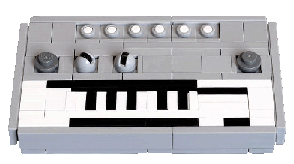
The design is not static and can change really easy, like Lego !
So I am open for ideas & suggestions.
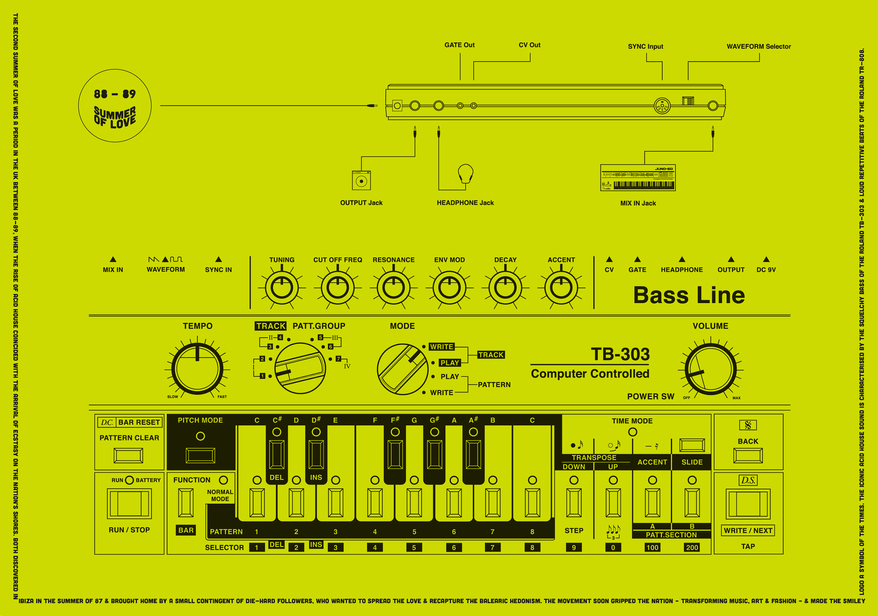
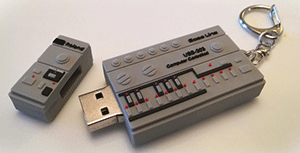
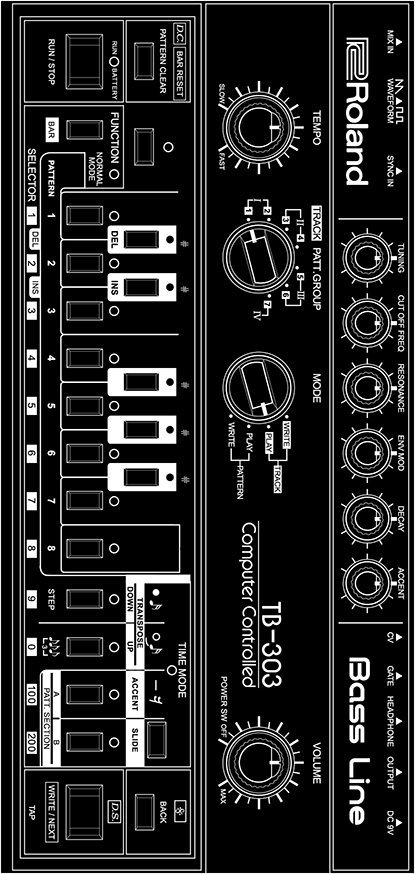
The TB-303 (Source wikipedia)
was designed by
Tadao Kikumoto
, who also designed the Roland TR-909 & TR-808 drum machine. It came out on the market in 1982. It was marketed as a "computerised bass machine" to replace the bass guitar.
it was a commercial failure and was discontinued in 1984. However, cheap second-hand units were adopted by electronic musicians, and its "squelching" or "chirping" sound became a foundation of electronic dance.
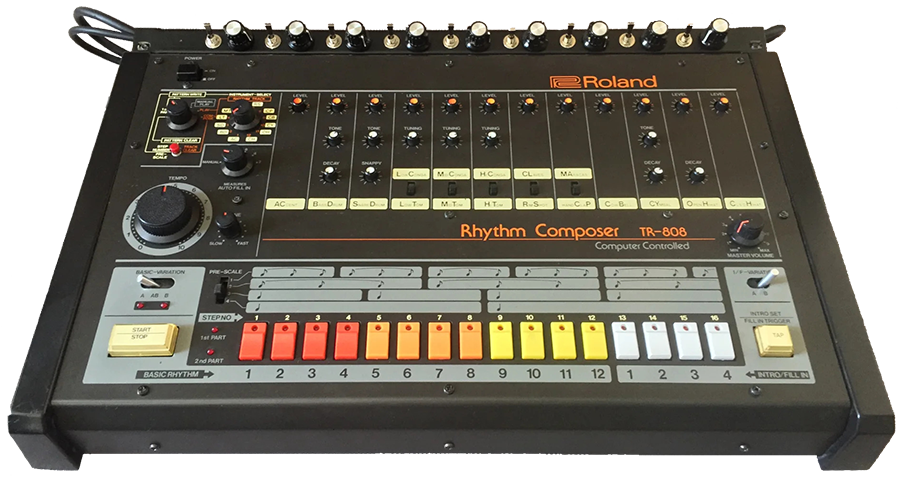
The TR-808 (Source wikipedia)
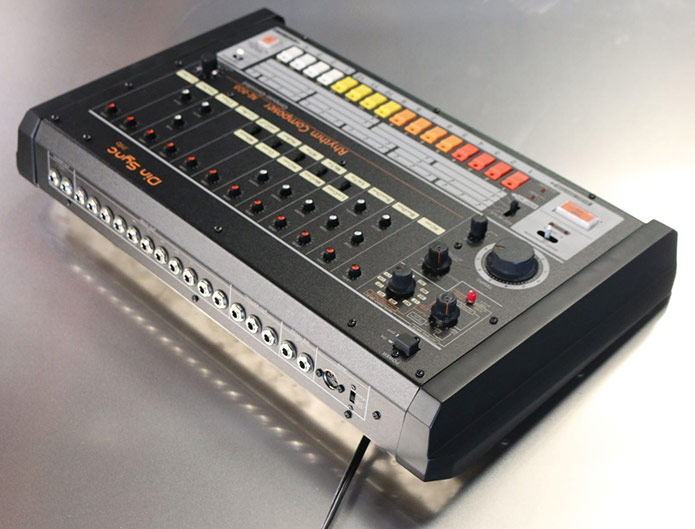
is a drum machine manufactured by Roland between 1980 and 1983. It was one of the first drum machines to allow users to program rhythms instead of using preset patterns. Unlike its nearest competitor at the time, the more expensive Linn LM-1, the 808 generates sounds using analogue synthesis.
The TR-909 (Source wikipedia)
is a drum machine manufactured by Roland in 1983. It succeeded the TR-808, and was the first Roland drum machine to use samples for some sounds. It was also the first Roland drum machine with MIDI functionality, allowing it to synchronize with other devices. Though it was a commercial failure, the 909 became influential in the development of electronic dance genres such as techno, house and acid.
The TB-303 was actually intended as a replacement for the bass guitar. It proved less suitable. However, it was capable of much
more. This was particularly evident in the Acid - Music, which emerged from this small box. What's particularly striking is the
dynamics of the sound. It's rock solid, especially when used analog. You'd need some "rare parts", high-quality Japanese parts
to match this sound. A mountain of "303 clones" inspired by the ZilverBox have also appeared on the market. (See 303 clones)
This also happens in the software, they've made a science of making their sound resemble that of the TB. (See 303 software)
Popular for almost 50 years, and we're still going 303.
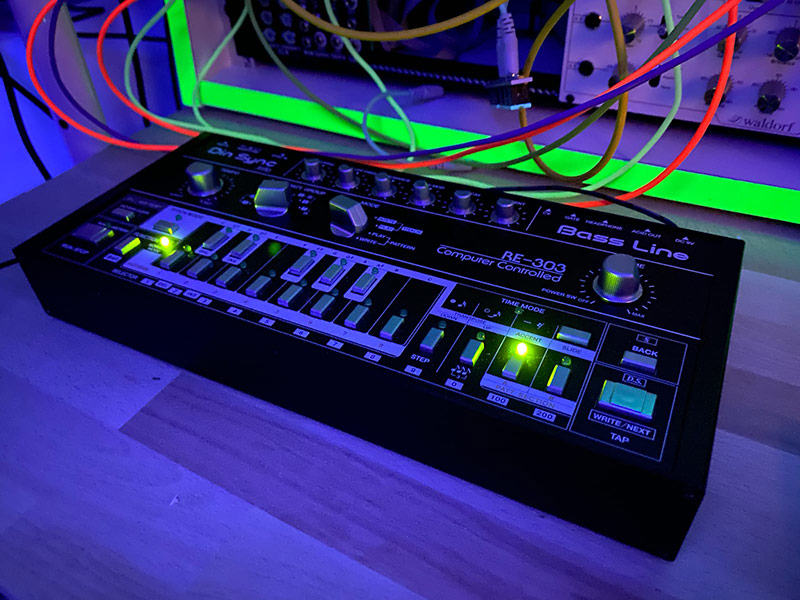
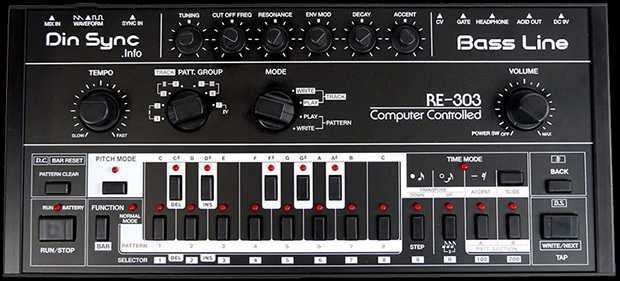
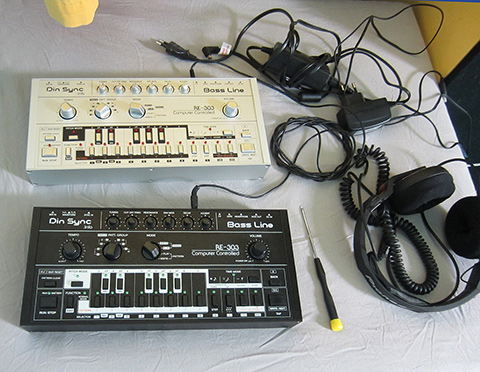
The Din Sync RE-303 (DIY kit)
The Din Sync Re-303 isn't just a replica of the the Roland TB-303 Bassline, it's even better. You feel it when you work with it,
even when you hold it in your hands, this is top quality ! The RE-303 is made of best durable parts and the case is made of
aluminum. Din Sync used for the electronica parts (you have to order "the rare parts" separately) only the best and that is
reflected in the sound and has also midi. The RE-303 comes in three colors: black with white print, silver with black print,
and gold with black print. You can also use these colors with the buttons. The LEDs are available in red, green, blue, and UV.
Since the TB-303 is exactly the same as the RE-303, the extra MODs apply to both.
You have 3 CPU types for the RE-303 & TB-303
The Pixie CPU, a replica of the original TB programed by Roland, as DIY kit and manufactured. Supported by updates it can
do quite a lot more nowadays. firmware v1.4.3 PIXIE CPU. For the RE-303/808/606, the midi-note/in works now.
PIXIE Manual
The Sonic Potions CPU with midi fuctions like : note In, accent & slide and data dumps. Also randomizer and other programing extra’s. Some complain about instability of the track edit.
It is no longer available and will no longer have updates.
SP Manual
The Quicksilver CPU is an upgrade MOD. With more live performance functions and equipped with USB for upgrades and USB
MIDI. Can send and receive MIDI notes and MIDI clock. Unfortunately the Quicksilver is no longer made.
Quicksilver Manual
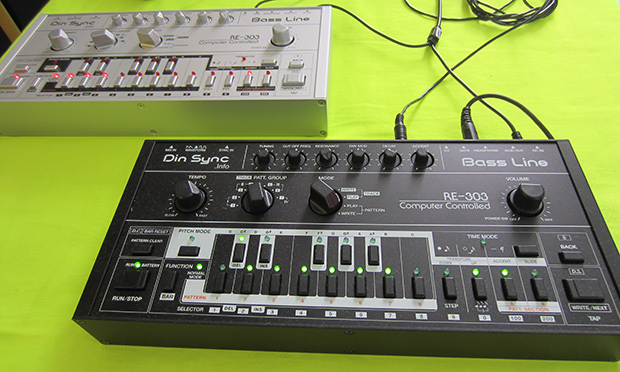
The printing is opposite, black and white and the LEDs are also opposite, red and green. My initial intention was to create
two very different RE-303s with different filter inputs (CV/MIDI) and CPUs. The sound of the RE-303 is already different
because it's analog, but it's also configured differently with "Res max adjust". The ZilverBox is more suitable for MIDI,
while the Blackbox performs better with a CV/Gate and DIN-Sync setup. This gives each one its own distinct character.
The ZilverBox (Pixie CPU)
I bought it from a hobbyist, but I wasn't satisfied with the sound. Replaced three transistors (2SA733),
the sound was slightly better, but still not a true TB sound.
So I had another DIY kit builder (Sonic Mechanix) check the RE-
303 and make sure the correct rare parts were used.
Everything was fine, but the fault was in the filter section. Two yellow film capacitors had the wrong value (10 times too small). After replacing them, the resonance works now fine.
He adjusted the VCA (BA662 Clown), set the PSU to 5.333V, and calibrated the cutoff and tuning.
The ZilverBox has 1 MOD on board:
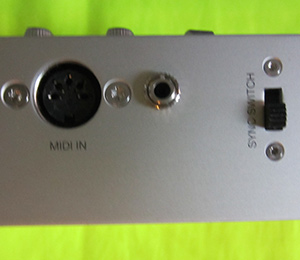
Midi-Filter-in - MIDI modulation control
(MidiBass 303 Kit). (See mod links)
The sound is that of a lead synth, with a lot of dynamics. I bought an expensive overdrive (Dtronics DT-303) for it, and the overall
sound is definitely unique. A nice, clear sound, but also with plenty of bass (low-end).
Since the latest PIXIE CPU update, the MIDI-Note/In finally works well, very handy.
It was a long road, but ultimately, along with the MIDI-Filter MOD and an extra MIDI-In port for uploading PIXIE updates, the ZilverBox has become very complete and very useful in the studio.
The BlackBox (Sonic-Potions CPU)
I was looking for a counterpart to the Zilverbox, with a different sound but also a different CPU.
So I ended up with this BlackBox, built by Sonic Mechanix and upgraded with green LEDs and two extra MODs.
I had hoped that the Sonic Potions CPU would support MIDI-Note output (the SP website says "Full MIDI I/O"), but the manual
on the MIDI IMPLEMENTATION CHART states that it doesn't support MIDI-Note output. I tested it, and unfortunately, that's the case.
It's also a shame that the Sonic Potions CPU is no longer available and won't receive any updates.
The Sonic Potions CPU does have more options and features, like data-dump and also has its own manual. Although it's generally very similar to the current PIXIE.
The BlackBox has 2 MODs on board:
The Spacemod "Res max adjust" MOD and thanks to this MOD the BlackBox sound became very different.
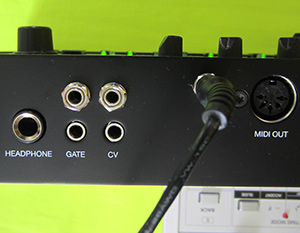
Kenton 3 Sockets - Kit to add : CV-in / Gate-in / Filter-in (CV-Gate control with three additional sockets). (See mod links)
The sound is a bit dreamy, like a distant synth loop, but the BlackBox also has a nice low, dark baseline.
I carefully adjusted the Res Max setting, as it can distort quite a bit at full tilt.
I've tested the CV filter control extensively, and the nice thing is that it works in conjunction with the filter cutoff potentiometer.
This way, both have an effect, and you can shift the same filter sequence from almost closed to fully open.
This also applies to the MIDI to Filter MOD, which is very useful for live performances.
Disadvantage of the TB/RE-303 : A major drawback is the lack of a long-standing promise : Midi-Note output.
This is because it's currently not possible to directly convert your RE-303 sequences to Midi-Note. The only CPU we can expect an update for is the
PIXIE CPU. MIDI storage and analysis of the MIDI data could be beneficial in this case.
TB & RE-303 "Rare" Parts
For the RE-303 parts is the 2sc1583 VCF, I believe is seen as the kit with the best acid sound. These are the most important parts
you need : Transistors (2SC2291, 3x 2SC1583, 2SK30A-O, LA4140, 8x 2sc2021R.) and IC like the famous BA662 VCA chip.
RE-303 is available as a DIY kit, the price including case is between 600 and 800 euros, Manufactured are they available for between 1000 and 1100 euros. (Link DIY Build Service) The Quicksilver & Sonic Potions CPU cost both for about 100 euros.
MODs, or modules, are additional additions to the TB & RE-303 in this case. MIDI or CV MODs are the most common.
But there are also more elaborate MODs, such as the Quicksilver, the Borg MOD, the Ultra303 MOD, and the Sonic-Potions MOD.
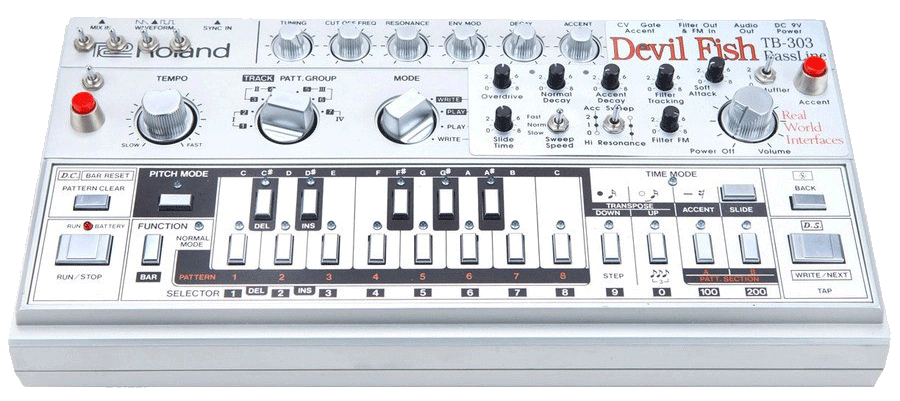
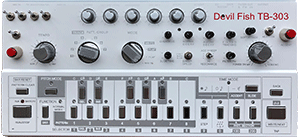
But the most elaborate MOD is definitely the Devil Fish! It's a shame you have to drill open half the TB, but if it's done properly,
it looks good. I haven't come across an RE-Devil Fish yet! In theory, it's possible because the TB & RE are exact the same,
perhaps the aluminum case is an obstacle. We're also waiting for a MIDI MOD that allows you to control all the upper rotary knobs.
Article : TB-303 ‘Devil Fish’ vs Behringer TD-3-DF >
Synthtopia.com
Article : Investigating Unique aspects of the TB sound >
Firstpr.com
TR-909 / RE-909 - The Original & Replica
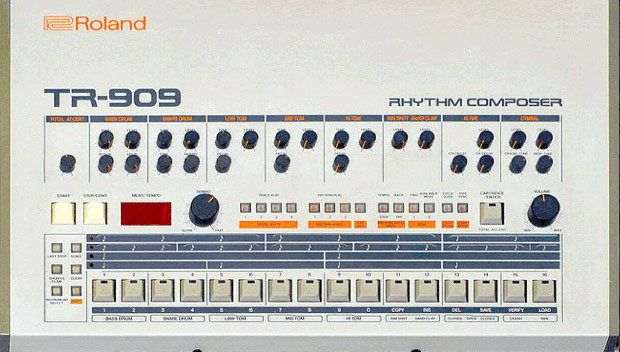
TR-909 Short History
Compared to the TR-808, the 909 sounds are aggressive and "punchy". The 909 was the first Roland drum machine to use
samples, for its crash, ride and hi-hat sounds. Hoshiai sampled them in 6-bit and edited the waveform on a computer
with a CP/M-80 operating system. Hoshiai said he was proud that the TR-909 had created new musical forms, which he
had not expected. The 909 was a commercial failure, and was sold cheaply to creatives on a small budget, who in turn
had access to a new sound that caught on. Think of Electro, Techno, Acid, House but also Hip-Hop and even Jazz.
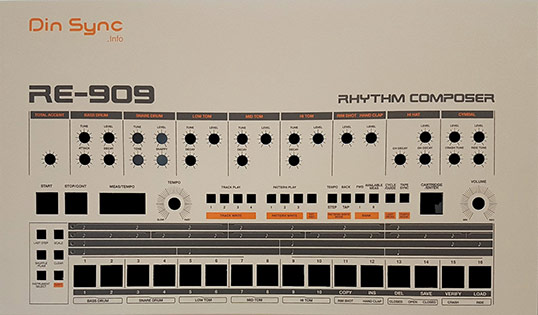
The DIY kit RE-909
It's a replica (RE-909), but in my opinion, it's better
than the original. It is sold in 2 colours: black with
white and blue print, light grey with dark grey print.
The RE-909 is practically new. Unlike the TR-909
(1983), which is on average 40 years old. This
means transistors and capacitors need replacing.
The sound diminishes, and the power supply voltage
can also fluctuate. These should be replaced around
this time, which is what I did in my TEEBEE.
Problems have also been reported online about sync
issues with the TR & RE-909. Especially the older
firmware 1,2,3 gives a lot of Midi sync problems.
But also the firmware 4 that comes standard with
the RE-909, occasionally goes haywire also. MIDI
and storage were also somewhat behind in the times (1983), so maybe
the 5.0 firmware update may be necessary. To make the
909 usable by modern standards, it allows for simultaneous preforming and editing.
Has data dump and fixes Midi Sync problems.
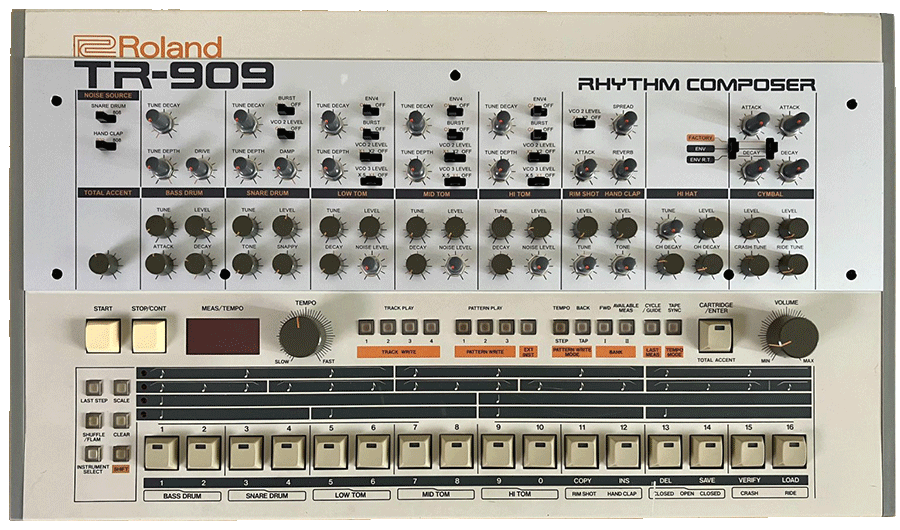
TR-909 : Technical Specifications
TR-909 RHYTHM COMPOSER (1983-1984) Owner's Manual: Manual TR-909
MEMORY CAPACITY: 48 Rhythm Patterns (16 x 3 Pattern Groups) x 2 (Bank |, ||)
TRACKS: 4 Tracks (1 to 4: Continuous Maximum Measures 896) x 2 (Banks |, ||)
STEPS : 1 .. 16 Steps. REAR PANEL : Master Out (L, R / MONO) [6 V p-p, 1 kW]
Multi Out : BD, Snare, Low Tom, Mid Tom, Rim Shot, Clap, Hi-Hat, Crash, Ride
MIDI (IN / OUT x 2), Tape Memory/Sync, Save/Out, Load/In, External Control,
Trigger Out : (Rim Shot: +14V, 20 ms pulse). Start / Stop (DP-2) Sync In (5P-DIN)
(1: Run / Stop, 2: GND, 3: Clock, 5: Continue). Memory Cartridge Slot (For M-64C)
POWER CONSUMPTION: 14W. DIMENSIONS: 486 (W) x 105 (H) x 300 (D) mm.
19 - 1 / 8 (W) x 4 - 1 / 8 (H) x 11 - 13 / 16 (D) inches.
WEIGHT: 4.5kg / 9lb 15oz
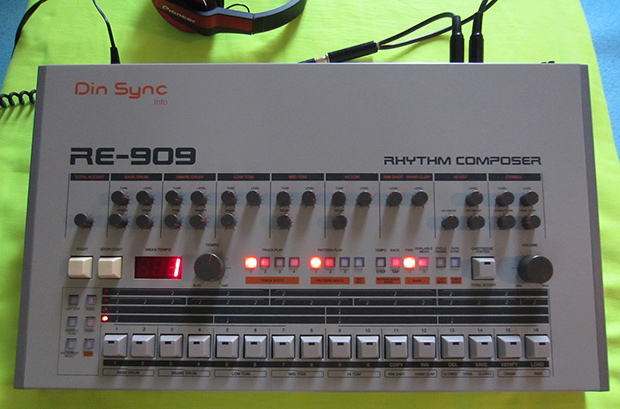
My RE-909 !
In 2025 I bought one, so now I also own a real 909.
I'm naturally happy with it, but it's also the first time I've
owned a real professional drum machine and learned
how to use it. There are tons of YouTube help videos
on how to use such a device, and it's a great way to
get started. What I do need to get used to is the two
types of kicks: snare and toms, and how to use them
properly. The kick on this 909 happens to be exactly
a G#, making it very usable (live tested). And, at my
request, an external (AC) power supply. This because
the magnetic field and heat can affect the electronics
and an external power supply is easily replaceable.
The RE-909 has 2 MODs on board:
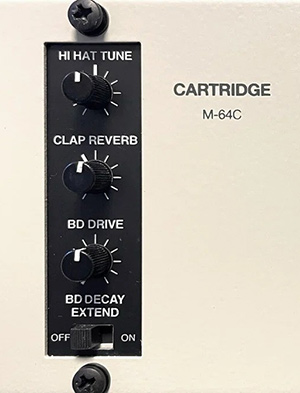
The P4L MOD (Cartridge module) (See pic MODs links)
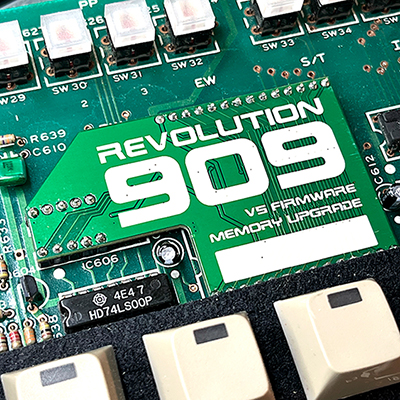
The Revolution 909 Memory & v5 firmware upgrade
Disadvantages: It doesn't have a headphone jack
and is very "BIG," almost half a meter long, so it
barely fits in my large backpack! These days, you
can get smaller gear, but not this analog. I'm all about the original sound, which is hard to recreate...
(Build by : Sonic Mechanix)
TR & RE-909 "Rare" Parts
The RE-909 basis kit cost 379,27 Euro and the RE-909 case kit 300 euro, but you also need the 909 style caps and IC like the
famous BA662 VCA chip. All the parts are the same as the original. The RE-909 is currently only available as a DIY kit and costs
around 1000 euros complete. Manufactured with safety PSU & lithium battery, they are around 2200 euros (Link DIY Build Service).
The most well-known MOD is the P4L, available as a DIY kit. It's located in the cartridge's place (see right pic), so
you don't have to drill any holes. That's probably also the reason for its success. Most 909 MODs shared online require
you to make and/or invent them yourself. Honestly, I don't like drill any holes either. An external breakout box
(see ModBox) would be best; it only requires one extra hole at the back, but they're rare. Or make one yourself.
TR/RE-909 Update : Revolution 909 (firmware 5.0)
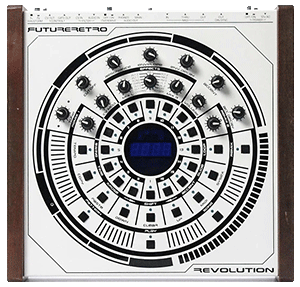
The Revolution 909 is a Memory Upgrade and a firmware upgrade to v5.0.
The main reason for me to update to firmware 5 was to address sync issues. I really tried, but even with firmware version 4, it is not possible to get the 909 to run properly in sync as a slave using a DAW as the master.
The reason is actually simple: when the 909 came out, MIDI had just been invented and implemented, but there were still few MIDI functions and the sync didn't always work well. Since the RE-909 is a replica, it also inherited the terrible MIDI. Because I do want to work with the sequencer capa- bilities of the 909 (such as the swing function) and don't just want to use my 909 as a MIDI module, I had no choice but to update my RE-909 to v5. It essentially turns into a drum machine with modern capabilities and functions, but with that fat analog sound.
The update includes : The new v5 firmware not only contains fixes and optimizations of the original versions 1 and 4, but new features have also been added! Fixed Sync in & out bugs.
32 Internal Banks instead of 2 and, importantly, the Mute function. It is also possible to edit while the 909 is playing. Also very handy is the 909 Librarian, a Mac/Windows application, which allows you to save the contents of the 909 to your PC/Mac. This program also contains various other functions and settings, and the update tool for new versions. The external MIDI capabilities have also been expanded.
Link Site
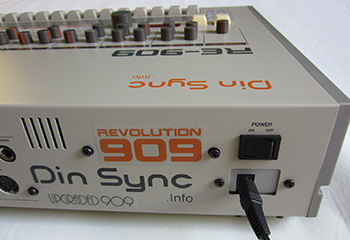
The Revolution 909 stickers on the outside. On the left, the extra Instant function, and on the right, mute mode, ext map, ext instrument.
TR-808 / RE-808 - The Original & Replica
The RE-808 is out now !
808 day : August 8, 2021 the RE-808 was released, the latest contribution from Dinsync !
For €555 you have the basic DIY kit (It is currently Out of stock) and you also need the order the RE-808 case and some rare parts.
For the case is a waiting list. Also update your PIXIE CPU firmware v1.4.3 for PIXIE CPU. For extra midi-note in.
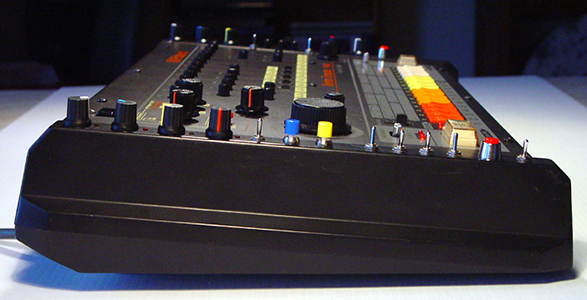
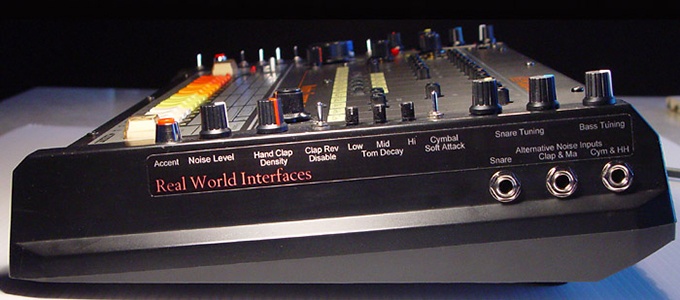
The DIY kit is 1 : 1, a real replica and at the back is a switch so you can choose between midi and sync. All instruments have a separate outputs.
The black aluminum case looks fantastic. The finishing is top notch, every detail has been taken care of, wow !
You can choose to have it built for you by a DIY kit builder. He can also help if you can't get your 808 kit working, for hourly wage.
A fully built kit costs around 2200.
What I personally find very appealing about the 808 is that it is completely and exclusively analog. The video about the Super 808, which is actually quite complex, confirms for me that the basic sounds are very good. However, the execution is a bit spartan when you consider everything that is possible with this fantastic drum sound generator.
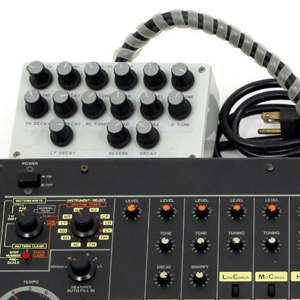
In this way, a good pitch or decay is essentially missing per sound in the source sound, but those can optionally be added with a 808 MOD.
TR & RE-808 "Rare" Parts
The RE-808 basis kit cost €555 and the RE-808 case kit €420, but you also need the ayda A-1212 + tayda A-1185 potetntiometers
and the famous ROLAND BA662A €60. RE-808 Rare Parts Pack : €205. All the parts are the same as the original. It also needs the pixie CPU €100.
The RE-808 is currently only available as a DIY kit and costs
around €1400 complete. Manufactured with safety PSU & lithium battery, they are around €2300 (Link DIY Build Service).
There are actually no commercial kits to upgrade the 808.
Except the TR-808 MIDI Retrofit Kit. Otherwise, I suspect it pretty much comes down to the same thing. Basically, what was already missing from the 808.
But these MODs turn the 808 into a powerhouse; just take a look at doctormix's videos (See 808 YT playlist). It does cost a lot of money and research, though, because unfortunately, I haven't seen any schematics online yet.
Nothing can beat the original TB / TR Hardware because of the authentic analogue sound.
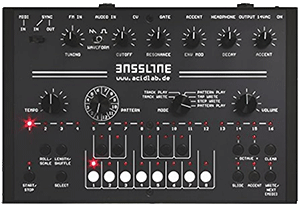
So with clones and you have many, try to sound like the original 303, but it is often not the "real" sound.
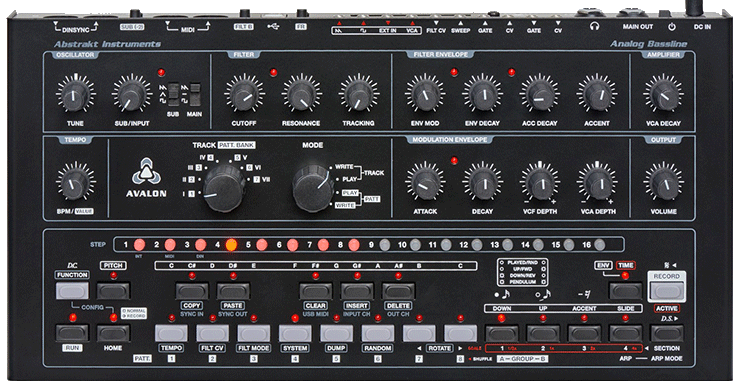
The best clone in my opinion is the AVALON. A major drawback is that the Avalon is very rare these days.
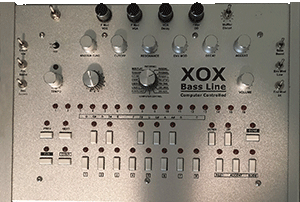
The second is the XOXBOX (Andy Pledger Built), In third place the Braintec TB3 and the TEEBEE, because
of the excellent sound quality. For the 909 clones, the best clone is the 9090 PROJECT, a 909
DIY (self build kit).
Second place the SR-909. In third place YOMOX Drumsynthesizers.
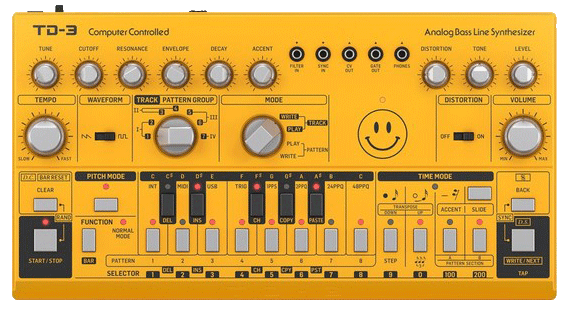
The "clone" list doesn't include any synthesizers other than true "analog" ones, so no TB-03. You have to draw the line somewhere, and Roland's mediocre attempt to revive the old one isn't particularly impressive sonically, even though the sequencing capabilities may be good.
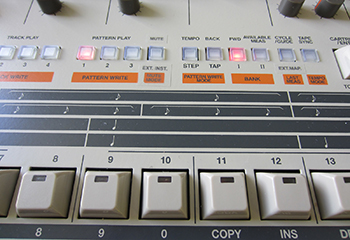
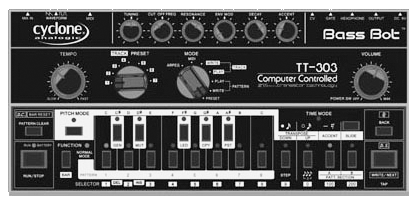
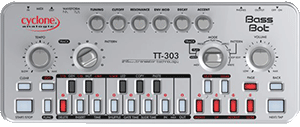
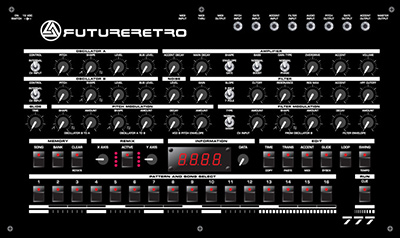
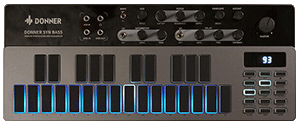
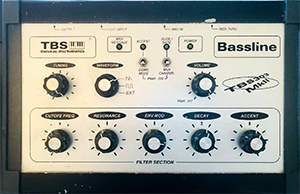
There are also clones that do not even remotely resemble a TB, such as the MAM MB33
and the TT-303, even the electronic components are completely different.
The prices are either the last official price (it may be a bit higher or lower) or the current new exact price.
Conclusion:
Some clones have their own character, but sometimes they don't resemble the TB. Is that
a problem? I think it's a nice addition and sometimes an improvement like the AVALON.
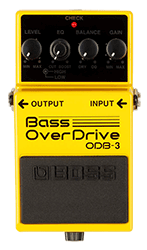
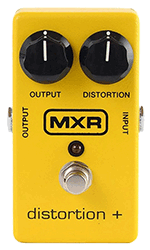
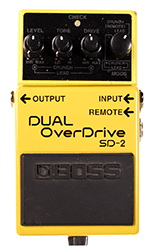
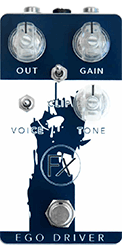
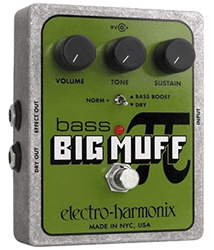
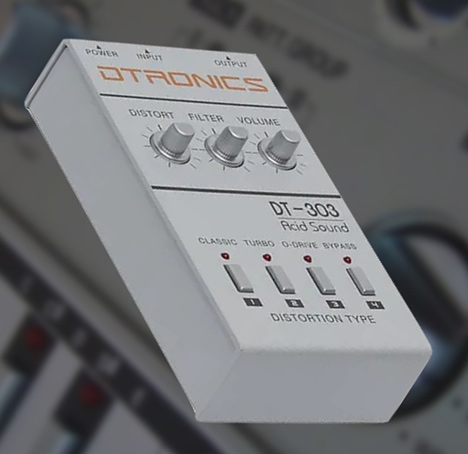
For further enhancing of the 303 sound, a distortion or overdrive is usually used or a similar effect. To get a good overview of which analog pedal best suits your personal 303 sound, there are several comparison sites and YT movies (see the YT playlist below on the right).
It is important to hear these pedals in combination with a 303, because a guitar has a completely different character and output voltage. For example, there are pedals that sound good on a guitar but not on the 303 and vice versa. The pedal / effect must therefore sound good in the basics, but it is also important that the sound has various possibilities to distort the sound.
Not all effects with many buttons meet this requirement, but they do increase the possibility of performance. Effects with 2 knobs, mostly volume and tune, is very poor, but there are few where most options actually improve the 303 sound. After all, most pedals / effects are developed for guitar and bass guitar. Also special effects have been developed for the 303. They are rare and often expensive.
Like the DT-303, specially developed for the TB-303. Funded with crowdfunding, it comes in a heavy metal case, so to speak.
But luckily there are also a number of good pedals / effects for both guitar and 303.
Here's a selection of the best 303 distortions and links to help you with your choice.
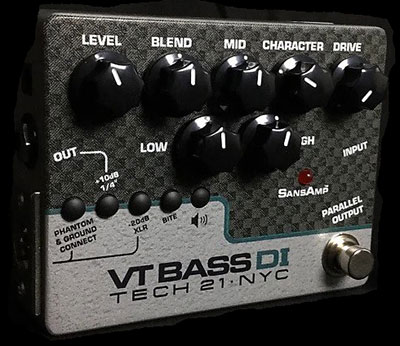
Left and right the two best in the test: Dtronics DT-303 & Tech21 VT Bass DI, are the most expensive (260/300 euros).
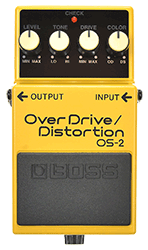
One of the cheapest and in third place is the Boss OS-2 (100 Euro), see below.
-----------------------------------------------------------------
  ##### Copyright (C) 2020 MNX2010. All rights reserved. #####
****** THANKS TO Google Translate AND OTHERS FOR SUPERVISION  ******
-----------------------------------------------------------------
For contact, Party tips, Links or comments, email me.
Or you can visit my home page for impressions of creativity.
This site is made in HTML 4.0 for Explorer, Chrome & Firefox.
For Smartphone Use minimal resolution of 1024 pix. Made with Photoshop & Notepad.








 Facebook Groups :
 Announcement



 ART of Living
 Natural Born Acid Techno

 In Acid Techno there are also different styles, the more Funky & Groovy and more Experimental & Acid-Core style. Within the limits of the extreme,
we simply want danceable music, and go for the experience of the human mystique of our dancing ancestors.
03-03-21 DJ ShamanX
In Acid Techno there are also different styles, the more Funky & Groovy and more Experimental & Acid-Core style. Within the limits of the extreme,
we simply want danceable music, and go for the experience of the human mystique of our dancing ancestors.
03-03-21 DJ ShamanX






 The BlackBox (Sonic-Potions CPU)
 The update includes : The new v5 firmware not only contains fixes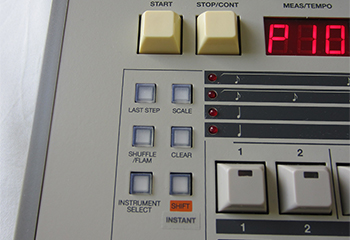




 For further enhancing of the 303 sound, a distortion or overdrive is usually used
 Not all effects with many buttons meet this requirement, but they do increase the possibility of performance. Effects with 2 knobs, mostly volume and tune, is very poor, but there are few where most options actually improve the 303 sound. After all, most pedals / effects are developed for guitar and bass guitar. Also special effects have been developed for the 303. They are rare and often expensive.
Like the DT-303, specially developed for the TB-303. Funded with crowdfunding, it comes in a heavy metal case, so to speak.
But luckily there are also a number of good pedals / effects for both guitar and 303.
Here's a selection of the best 303 distortions and links
Not all effects with many buttons meet this requirement, but they do increase the possibility of performance. Effects with 2 knobs, mostly volume and tune, is very poor, but there are few where most options actually improve the 303 sound. After all, most pedals / effects are developed for guitar and bass guitar. Also special effects have been developed for the 303. They are rare and often expensive.
Like the DT-303, specially developed for the TB-303. Funded with crowdfunding, it comes in a heavy metal case, so to speak.
But luckily there are also a number of good pedals / effects for both guitar and 303.
Here's a selection of the best 303 distortions and links